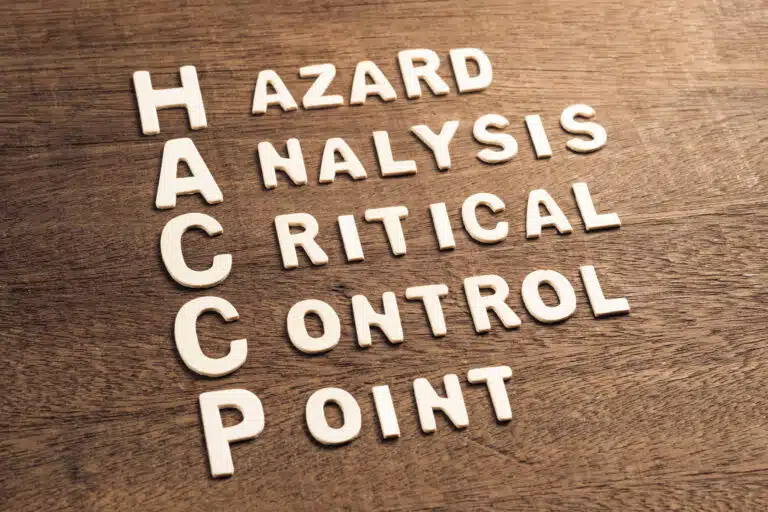
Are you preparing for a HACCP interview or refreshing your knowledge for HACCP training in the UK food industry? Whether you’re a café worker, supervisor, or manager in catering, retail, or manufacturing, employers and Environmental Health Officers (EHOs) frequently ask HACCP-related questions during interviews or Food Standards Agency (FSA) inspections.
This complete guide delivers HACCP interview/training questions and answers tailored to UK regulations in 2026. We’ve split the content into Level 2 (for food handlers) and Level 3 (for supervisors and managers) so you can prepare exactly for your role. All answers align with current FSA guidance, retained EU Regulation 852/2004, and standard awarding-body syllabuses (Skilltopia, Eversley Training, RSPH, CIEH).
Master these HACCP questions and answers and you’ll walk into any interview or training session with confidence.
What Is HACCP and Why Does It Matter in the UK?
HACCP (Hazard Analysis and Critical Control Points) is the legal food safety management system required for all UK food businesses. It prevents foodborne illness by identifying hazards and controlling them at critical points. Small cafés and restaurants can use Safer Food Better Business (SFBB) packs, but full HACCP knowledge is still essential for compliance and job success.
HACCP Level 2 Interview/Training Questions and Answers (Food Handler Level)
These questions test basic awareness – perfect for café staff, kitchen porters, or anyone handling food.
1. What does HACCP stand for? Hazard Analysis and Critical Control Points. It is a preventive food safety system, not just reactive cleaning.
2. What are the 7 principles of HACCP?
- Conduct a hazard analysis
- Determine the Critical Control Points (CCPs)
- Establish critical limits
- Establish monitoring procedures
- Establish corrective actions
- Establish verification procedures
- Establish record-keeping and documentation
3. Name the four main types of food hazards. Biological (bacteria, viruses), Chemical (cleaning products, pesticides), Physical (glass, hair, metal), and Allergenic (nuts, gluten, the 14 EU allergens).
4. What is a Critical Control Point (CCP)? A step in the process where you can prevent, eliminate, or reduce a hazard to a safe level (e.g., cooking chicken to 75°C in England/Wales or 75°C for 30 seconds in Scotland).
5. Give an example of a CCP in a café setting. Cooking raw meat or reheating ready-to-eat foods. If the temperature isn’t reached, bacteria survive.
6. What should you do if a critical limit is breached? Take the corrective action set out in the HACCP plan (e.g., discard the food, re-cook, or report it). Never serve unsafe food.
7. Why do you need to monitor CCPs? To make sure controls are actually working in real time. Monitoring is usually temperature checks, visual inspections, or timed logs.
8. What is a flow diagram and why is it important? A simple step-by-step drawing of how food moves through your kitchen (from delivery to service). It helps identify every possible hazard point.
9. What are prerequisite programmes (PRPs)? The basic good practices needed before HACCP works – personal hygiene, cleaning schedules, pest control, supplier checks, and staff training.
10. How does HACCP help prevent food poisoning in the UK? It stops hazards at source instead of relying on luck. This keeps customers safe and protects your business from fines or closure.
HACCP Level 3 Interview/Training Questions and Answers (Supervisor/Manager Level)
These go deeper and are common in manager interviews or when EHOs question the person in charge.
1. How do you carry out a hazard analysis? Identify all potential hazards at each process step, assess their likelihood and severity, then decide on control measures. Use a risk matrix (likelihood × severity).
2. What is the difference between validation and verification? Validation proves the HACCP plan will work before it’s used (e.g., scientific evidence that 75°C kills bacteria). Verification checks that the plan is actually working in practice (e.g., monthly audits, temperature records).
3. Explain how you would decide if a step is a CCP. Use the Codex decision tree (or your own simplified version): Ask “Is control necessary at this step?” → “Does a later step eliminate the hazard?” If the answer is no and control is essential → it’s a CCP.
4. What are your legal responsibilities as a manager under UK food law? You must ensure a HACCP-based system is in place, properly implemented, reviewed regularly, and that staff receive adequate training and supervision (Food Safety Act 1990 + Regulation (EC) 852/2004).
5. How often should a HACCP plan be reviewed? At least annually, or immediately after any change (new equipment, new menu item, ingredient supplier change, or incident).
6. Give an example of a corrective action for a CCP breach. If the fridge temperature rises above 8°C for more than 4 hours: isolate affected food, check stock, discard if necessary, repair the fridge, and record the incident.
7. Why is documentation so important in HACCP? It proves due diligence to EHOs and auditors. Without records, you cannot show your system works – even if it does.
8. How does HACCP link to Safer Food Better Business (SFBB) for small UK cafés? SFBB is a simplified HACCP system provided free by the FSA. Managers must still understand full HACCP principles to adapt the diary packs correctly.
9. What role does the Food Standards Agency (FSA) play in HACCP? The FSA issues guidance, templates, and enforces compliance. All UK HACCP systems must follow their latest advice (updated regularly – check food.gov.uk).
10. Describe a scenario where you would update your HACCP plan. A new allergen (e.g., adding sesame to a menu) appears → you must conduct a new hazard analysis, add controls, update the flow diagram, and retrain staff.
How to Prepare for HACCP Interviews and Training in 2026
The best way to ace these questions is to complete a recognised, up-to-date course. That’s exactly why thousands of UK food businesses choose Skilltopia.
✅ Recommended for most café and food-handler roles HACCP Level 2 Catering, Retail & Manufacturing
- Only £15 + VAT (£18 inc. VAT)
- Just 2–3 hours, 100% online & self-paced
- CPD accredited, meets UK regulatory requirements
- Instant digital certificate + free printed option
- Covers every Level 2 question above with real café examples
Enrol now → https://skilltopia.co.uk/product/haccp-level-2/
✅ Recommended for supervisors, managers & anyone responsible for HACCP HACCP Level 3 Catering, Retail & Manufacturing
- Only £45 + VAT (£54 inc. VAT)
- In-depth 100% online training
- CPD Level 3 accredited, FSA-aligned
- Certificate valid for 3 years
- Teaches you how to build, implement, and audit real HACCP plans
Enrol now → https://skilltopia.co.uk/product/haccp-level-3/
Both courses include interactive quizzes, real-life case studies, and voice-over so you can learn on your phone during quiet café shifts. Finish today and add the certificate to your CV or interview folder straight away.
Final Tips to Stand Out in Your HACCP Interview
- Always mention “UK food law” and “FSA guidance”
- Use café-specific examples (fridge temperatures, cross-contamination with allergens, cooking rice)
- Show you understand corrective actions and record-keeping – employers love practical answers
Ready to boost your food safety knowledge and land that café job or promotion in 2026?
Start your HACCP Level 2 course here → https://skilltopia.co.uk/product/haccp-level-2/ Start your HACCP Level 3 course here → https://skilltopia.co.uk/product/haccp-level-3/
Questions? Drop them in the comments – we’re happy to help you prepare for your next HACCP interview or training session.
Stay safe, stay compliant, and good luck!
Skilltopia – UK’s fastest way to accredited food safety & HACCP training.