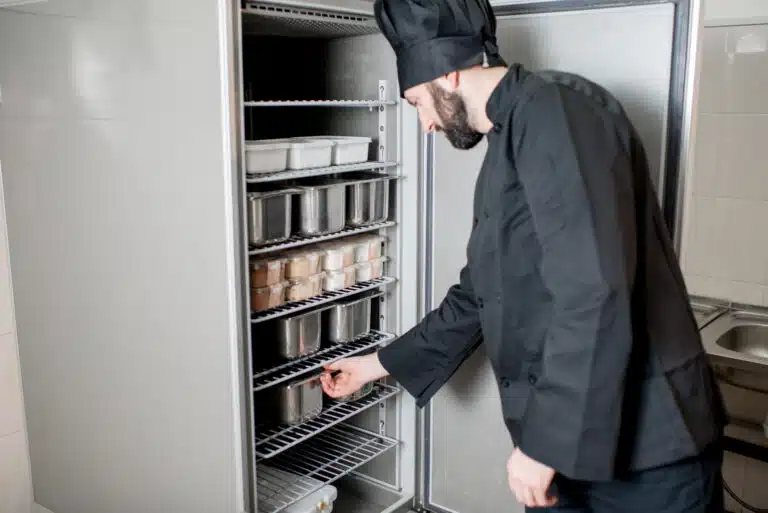
The rise of online food delivery has transformed how we eat, with platforms like Uber Eats, Deliveroo, and Just Eat dominating the market. Central to this boom are delivery-only setups, often called ghost kitchens, dark kitchens, or cloud kitchens, which prepare food exclusively for takeaway and delivery, without any customer-facing dining area. Recent studies show that around one in seven food businesses on major platforms in England are now dark kitchens, highlighting their rapid growth and importance in 2026.
While these models offer flexibility and lower overheads, they face unique food hygiene and safety challenges. From shared kitchen spaces to the critical handover during transport, maintaining compliance is essential to protect public health, achieve a strong Food Hygiene Rating Scheme (FHRS) score, and build customer trust. This guide explores the key compliance issues for delivery-focused operations partnering with major apps, practical tips for temperature control during transport, FHRS inspection realities, and why accredited training is vital, especially for remote or multi-site teams.
What Are Delivery-Only and Ghost Kitchens?
Ghost kitchens (also known as dark kitchens or cloud kitchens) are commercial facilities that produce ready-to-eat meals solely for delivery via apps. They may operate as single-brand setups or shared hubs hosting multiple virtual brands under one roof. In 2026, the UK has an industry-agreed definition: “Technology-enabled commercial kitchen(s) operating primarily for delivery, to fulfil remote, on-demand, consumer online orders of food for immediate consumption.”
These operations must register as food businesses with their local authority and comply with the same core regulations as traditional restaurants, including the Food Safety Act 1990, Food Hygiene (England) Regulations 2006 (and equivalents in Scotland, Wales, and Northern Ireland), and FSA guidance. No special exemptions exist for delivery-only models.
Key Compliance Challenges for Delivery-Only Setups
Partnering with Uber Eats, Deliveroo, or Just Eat brings visibility but also scrutiny. Here are the main hurdles ghost kitchen operators face:
- Shared Spaces and Multi-Brand Operations — Many dark kitchens rent space in hubs with several tenants. This increases the risks of cross-contamination, pest issues, and inconsistent cleaning. Responsibility for shared areas can be unclear, complicating HACCP plans.
- High Staff Turnover and Remote Management — Fast-paced environments often see rapid staff changes, making consistent hygiene training difficult. Remote teams (e.g., shift workers across sites) may lack direct supervision.
- Allergen and Menu Updates — Delays in updating platforms (sometimes days) can lead to inaccurate allergen info reaching customers.
- Delivery Driver Practices — Drivers are not employees, yet their handling (e.g., leaving bags in hot cars) impacts food safety.
- Identification and Registration — Some dark kitchens use multiple trading names, making them harder for Environmental Health Officers (EHOs) to track and inspect.
The FSA and local authorities continue to address these gaps, with calls for better guidance, mandatory licensing details, and aggregator cooperation.
Temperature Control During Transport: A Critical Link
Temperature abuse is one of the biggest risks in delivery-only models, as food spends time outside controlled environments.
UK regulations require foods needing temperature control for safety to stay out of the danger zone (8°C–63°C):
- Hot food must be kept at 63°C or above (best practice: heat to 75°C core before transport).
- Chilled food at 8°C or below (ideally 5°C or lower).
- Frozen food at -18°C or below.
Limited time outside control is allowed if it doesn’t pose a health risk, but operators must minimise this.
Practical tips for ghost kitchens:
- Use insulated bags or boxes designed for hot/cold retention.
- Monitor with digital probes or data loggers—many platforms now encourage proof of temps.
- Train staff on loading procedures and time limits (e.g., deliver within 30–45 minutes where possible).
- Partner with reliable couriers who follow hygiene protocols.
Failure here can lead to bacterial growth (e.g., Bacillus cereus in rice dishes) and poor FHRS scores.
FHRS Inspections for Ghost Kitchens
All food businesses, including delivery-only ones, fall under the Food Hygiene Rating Scheme (FHRS). Ratings (0–5) reflect:
- Hygienic food handling
- Cleanliness and condition of facilities
- Management of food safety (e.g., HACCP, training records)
Inspections by EHOs can be challenging for ghost kitchens due to:
- Hidden locations and multiple brands.
- Resource constraints for local authorities.
- Need for unannounced visits.
Operators report that more frequent inspections help maintain standards. Platforms like Just Eat often display ratings prominently, influencing customer choice—higher scores boost orders.
To prepare:
- Keep digital records accessible (e.g., cleaning schedules, temperature logs).
- Ensure all trading names are registered.
- Demonstrate due diligence through training certificates.
Training Recommendations for Remote Teams
With high turnover and distributed operations, formal training is non-negotiable. The FSA emphasises that staff handling food must receive appropriate supervision and instruction.
For ghost kitchens:
- Level 2 Food Hygiene and Safety — Ideal for kitchen staff and essential for compliance.
- Level 3 Food Safety — Recommended for managers overseeing multiple sites or brands.
- Food Allergy Awareness — Crucial for accurate labelling on apps.
- Refresher Courses — Annual or as needed to combat knowledge fade.
Online, accredited courses suit remote teams—flexible, trackable, and certifiable. They cover temperature control, cross-contamination, allergens, and delivery-specific risks.
At Skilltopia, our bundles offer cost-effective solutions for multi-site or high-turnover setups. Trained teams reduce incidents, improve inspections, and enhance platform performance.
Practical Checklist for Delivery-Only Compliance
Use this quick guide to strengthen your operations:
- Register with the local authority and update all trading names.
- Implement a robust HACCP plan tailored to delivery.
- Monitor temperatures at every stage (prep, holding, transport).
- Use colour-coded tools and dedicated cleaning in shared spaces.
- Train all staff (including refreshers) and keep records.
- Update menus/allergens promptly on platforms.
- Conduct internal audits weekly.
- Prepare for FHRS: digital logs, probe calibration, pest control proof.
Final Thoughts: Stay Compliant for Long-Term Success
In 2026, ghost kitchens and delivery-only setups are integral to the UK food scene, but food safety remains paramount. By tackling shared-space risks, mastering transport temperatures, preparing for FHRS inspections, and prioritising team training, operators can minimise hazards and thrive on platforms like Uber Eats, Deliveroo, and Just Eat.
Investing in accredited training not only meets legal duties but builds a safer, more reliable business. Ready to upskill your team? Explore Skilltopia’s food hygiene courses today—affordable, online, and designed for modern food operations.
Disclaimer: This article provides general guidance based on current UK regulations. Always refer to the latest FSA advice and consult your local authority for specific requirements.